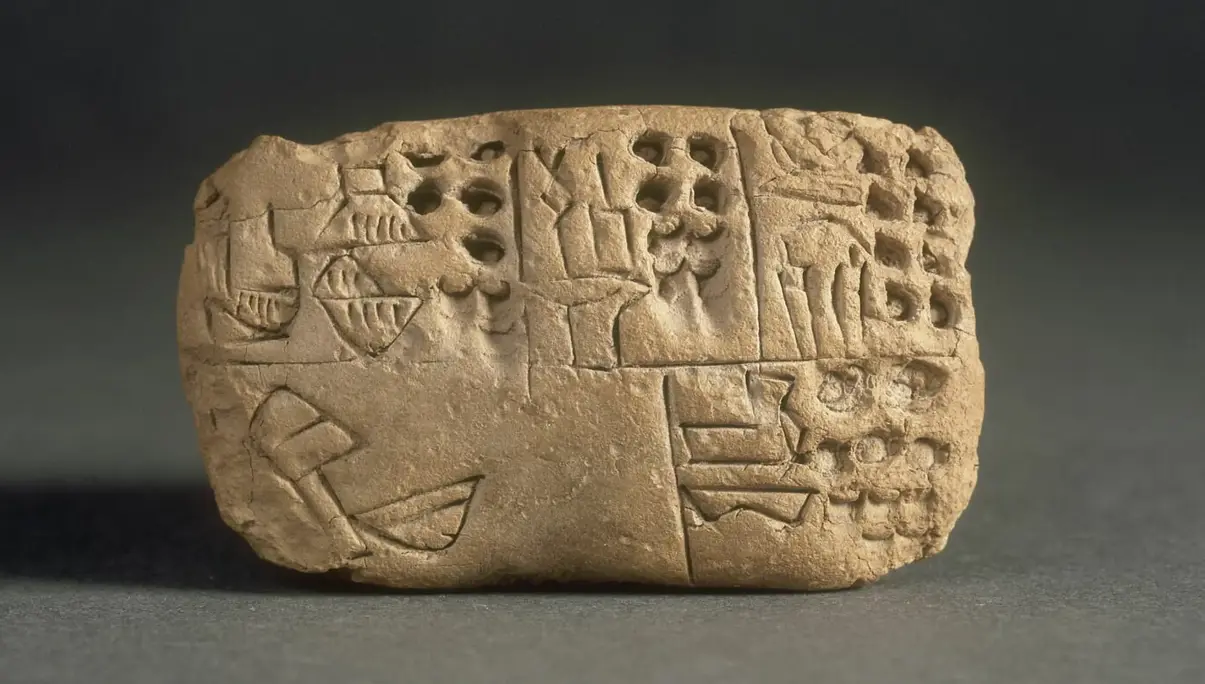
The image of the clay tablet is from the Musée du Louvres collection. AO 29560. ©2002 GrandPalaisRmn (musée du Louvre) / Franck Raux
The new DataArt IT Museum project explores millennia of data mastery — from baboon bones to AI brains. For our blog, Alexey Pomigalov, DataArt IT Museum curator, selected from this remarkable online catalog 5 ancient lists of data that changed the world.
There’s a common myth that data is a 21st-century invention. In reality, data engineering has been around for thousands of years. Our need to record, calculate, and analyze information has always existed. Over the centuries, humans have used records, counts, and tracking to build something bigger than what came before: from notching a baboon bone with a fingernail, to creating the first lists of taxpayers to run ancient empires, to compiling cargo lists to track Viking goods. These early innovations eventually led to punch cards, Excel spreadsheets, online shopping, and even chatting with AI agents today.
1. The Uruk Clay Tablet (Sumer, c. 3200 BCE)
A clay tablet recording barley and malt deliveries for beer production was found in modern-day Iraq. It can be viewed as the birth of Tabular Data. By separating the "label" (malt) from the "value" (quantity) using a grid, Sumerian administrators invented the row-and-column structure. It was the world's first spreadsheet, decoupling data types from data values.
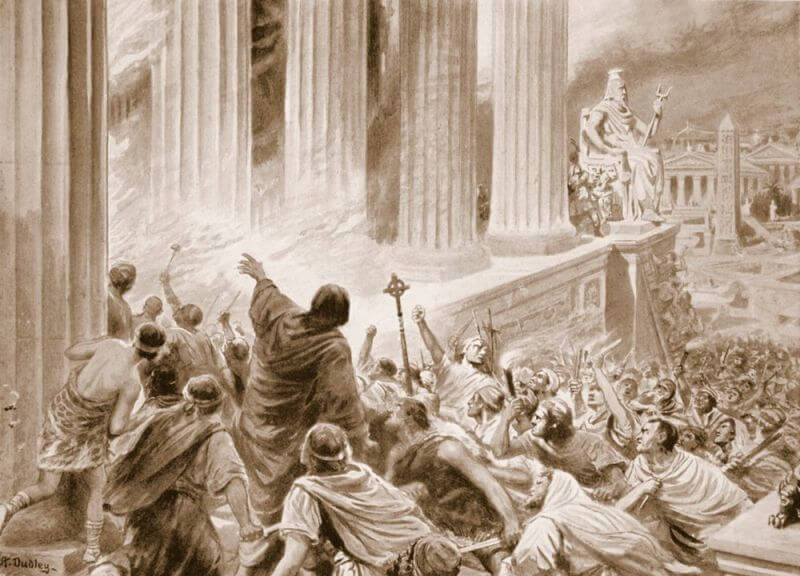
The Burning of the Library at Alexandria in 391 AD, Illustration from 'Hutchinsons History of the Nations' by Robert Ambrose Dudley
2. The Pinakes of Callimachus (Alexandria, c. 250 BCE)
A bibliographic registry of the 500,000 scrolls in the Great Library of Alexandria was the invention of Metadata and Indexing. Callimachus, an ancient Greek scholar and librarian, realized that data is useless if it isn't "addressable." He created a system that mapped a logical record (title/author) to a physical location (shelf), the ancient ancestor of the SQL index and the URL.
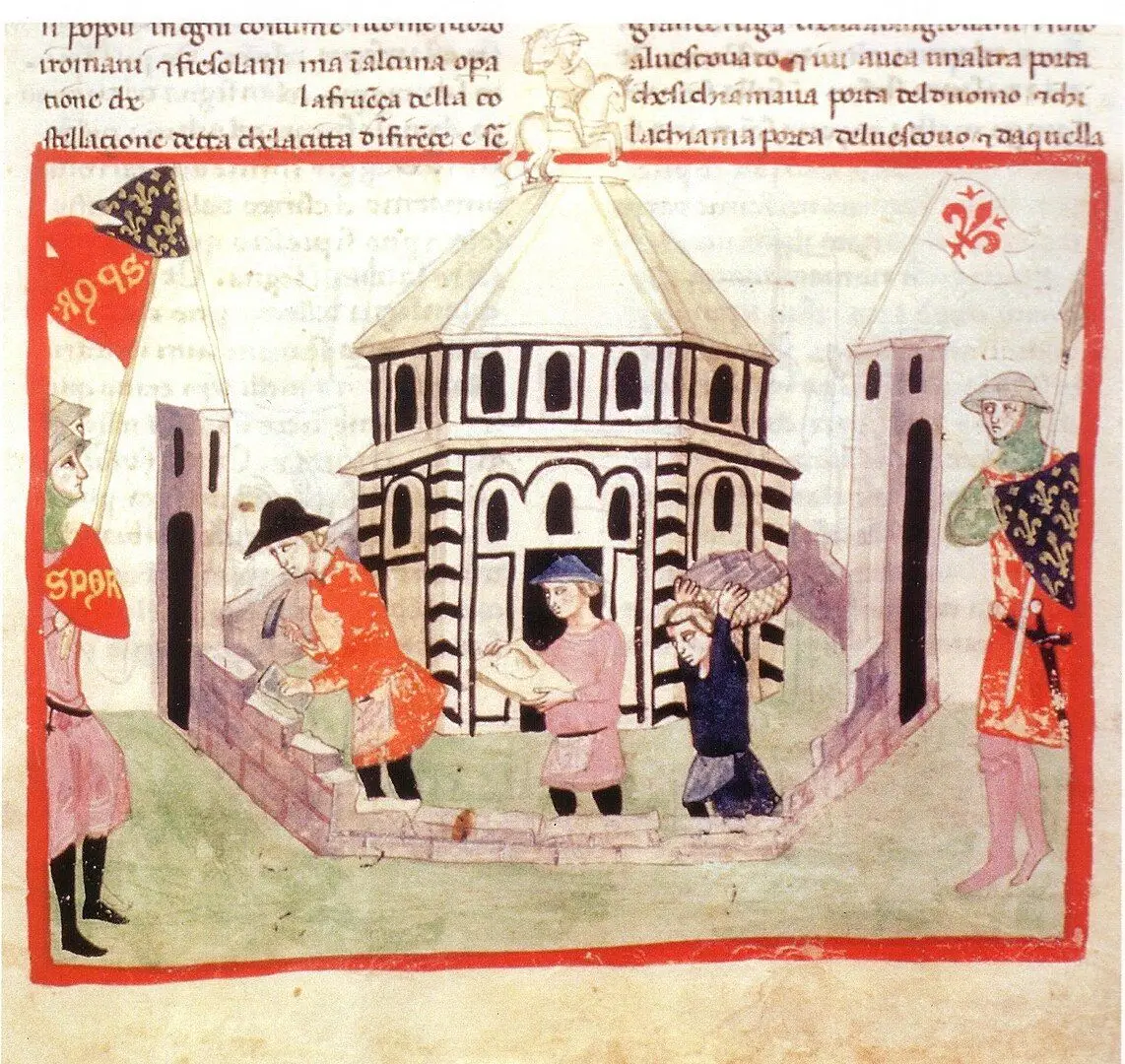
The miniature from the 'Nuova Cronica' depicts the famous Baptistery of Saint John and the building of the city walls. 14th century
3. Nuova Cronica by Giovanni Villani (Florence, c. 1348 CE)
A chronicle of Florence tracked birth rates, grain prices, and mortality during the Black Death. It represents the shift from simple logging to Descriptive Analytics. The Italian chronicler Giovanni Villani didn't just record history; he used statistical data to describe the economic and demographic health of the city, arguably creating the first Business Intelligence report.
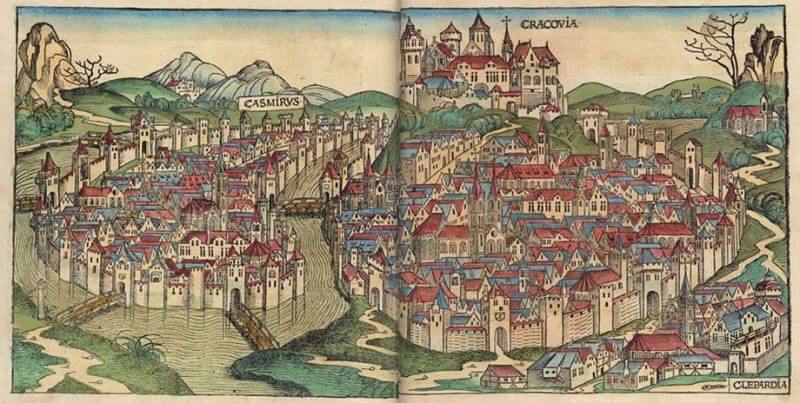
View of Krakow castle from the Hartman Schedel chronicle. 15th century
4. Liber Beneficiorum (Krakow, 1470–1480 CE)
Jan Długosz’s "Book of Benefices" is a massive register of church assets and endowments in Poland. As a precursor to State Statistics and ERP (Enterprise Resource Planning), it was a centralized database of decentralized assets, designed to give the "headquarters" (the Diocese) a unified view of geography, economics, and taxation across the region.
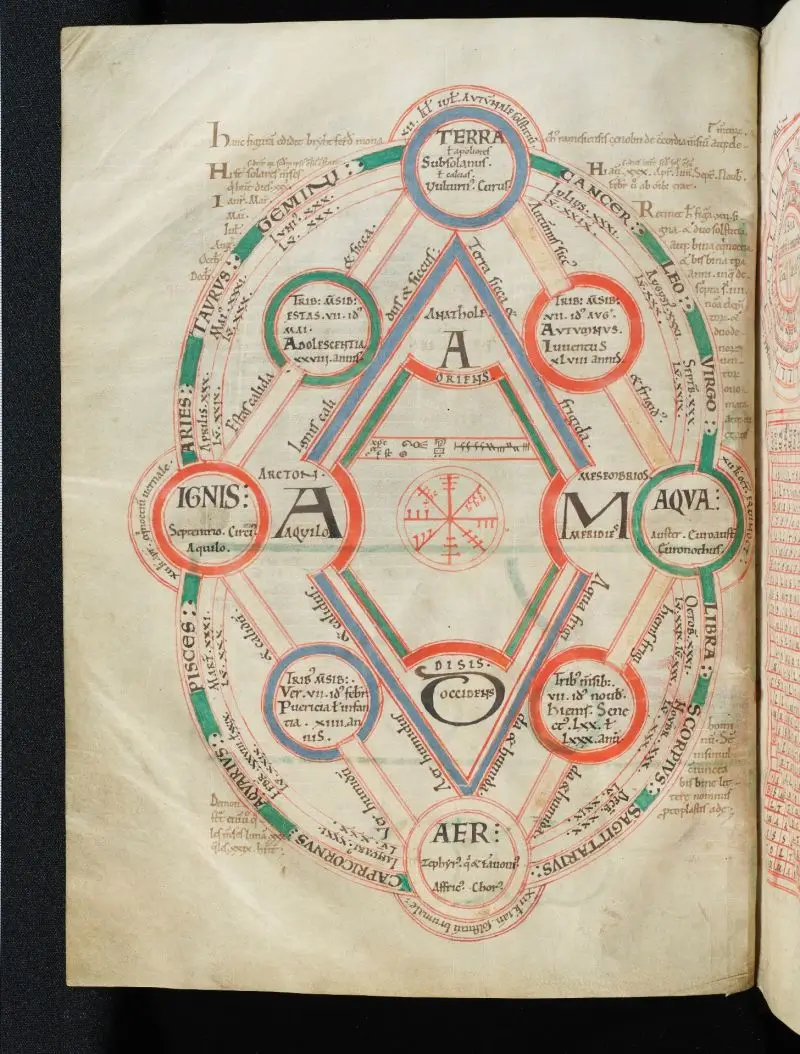
The illustration is the so-called Byrhtferth's diagram from the "Thorney Computus" dating back to XII CE England. The book is preserved and digitized in St John’s College of Oxford, St John's College MS 17
5. The Computus (Medieval Europe, c. 222–1200 CE)
Computus was a system of complex calculations used by the Church to synchronize lunar and solar cycles to determine the date of Easter. It can be viewed as the first Algorithm. Unlike a static lookup table, the Computus required "loops" of logic and conditional processing. It proved that mathematics could govern social time, paving the way for the clock cycles inside every modern CPU.
Our recent DataArt IT Museum project, Recount, Sort & Figure Out, traces the evolution of these concepts and highlights the massive role this technology played in shaping civilization.
Seen through this lens, you realize that data engineering isn’t new — we just have faster tools. The logic of organizing the world into rows, columns, and addresses is one of humanity’s oldest survival skills. Explore this multi-millennial catalog to see how the art of handling data has shaped culture, technology, and imagination. to see how the art of handling data has shaped culture, technology, and imagination.