“I needed a circle of adults I could turn to for help.”
Yana Osipova had her second child in December 2021, three months before her country, Ukraine, was invaded by Russia. Yana fled to Sofia, Bulgaria with her newborn and older son, and credits her DataArt support network for helping her get through the toughest times.
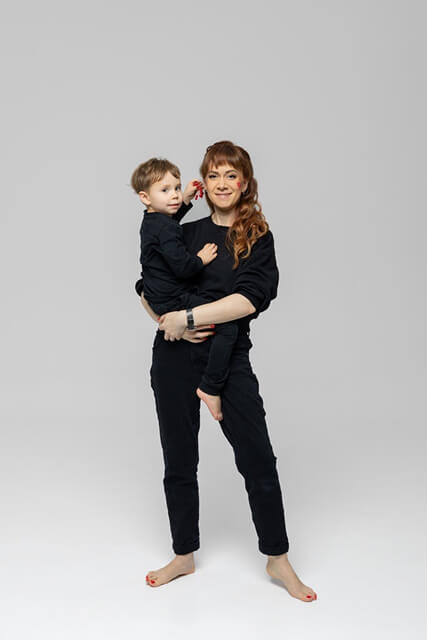
"My younger son was born in December 2021. I wasn’t planning to return to work for the first 6–12 months. But the full-scale invasion of Ukraine changed everything.
In March 2022, I found myself in Sofia, Bulgaria, alone with two kids (my older one was 11, the younger was 3 months old). I desperately needed a circle of adults I could turn to for help.
Sofia’s head of office allowed me to bring both my kids to the office, where I could change a diaper, feed the baby, and then leave him with a nanny for 4 hours (I found her thanks to a colleague, too). My older son would sit next to me and attend school online. I worried a lot that I was bothering my colleagues, but everyone treated me with so much humanity — it’s a very tender feeling when I remember it now.
To whoever decided to standardize the office design: please know that I cried when I walked into the Sofia office for the first time, because it felt like I was almost back in Odesa, at home. A sense of safety, stability, and normal life — that’s what I felt in the office.
Only new moms, I guess, really understand this: in the first months after having a baby, you live in survival mode. You don’t sleep because you’re rocking the baby at night. You feed the baby, and so you’re constantly hungry. And then you walk into a warm office where there’s coffee and cookies, and for 4 hours you can remember that you’re a human being: talk about APIs, backend, requirements, and feel that you still have brain cells left — not just a primal survival brain.
Four years have passed since then, and life in Odesa is still hard. I have many more stories where I can say that for me, humanity is the most important policy. I still feel that DataArt is more than just an employer to me."
“DataArt’s culture has made a tremendous impact on my life as a parent of a neurodivergent child.”
Mariana Amatto is a senior QA in DataArt’s Rosario, Argentina office. Mariana has given her son, who has autism, maximum attention for the last 15 years. DataArt has helped make this possible for her.
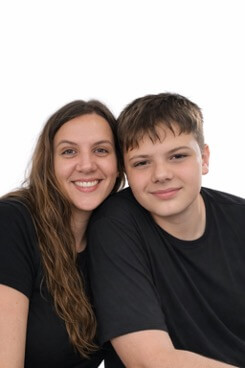
"I became a mother at a very young age. At the age of three, Mateo was diagnosed with autism. For many years, I had to put my career and personal goals on hold in order to dedicate myself entirely to his care and development.
Over the years — with the invaluable support of my mother, therapists, and my full dedication to his progress — Mateo began to improve. He started speaking and developed some truly remarkable abilities.
As he grew more independent, I felt that I could begin to rebuild my professional path, and that’s when I joined DataArt. I have now been working at the company for five years, and throughout this time, I have always felt supported and understood.
There have been days when Mateo needed more of my time and attention, and I was able to adjust my schedule, complete my work later in the evening, attend therapy sessions or interviews, or miss meetings when necessary. Throughout this time, I have always found understanding and support not only from my direct team but from the company as a whole. It has made a tremendous impact on my life as a parent of a neurodivergent child.
Being able to grow professionally while also being present for my son is something I deeply value, and DataArt’s culture has played a key role in making that possible."
“DataArt treats people as individuals, not as men or women.”
Ellina Azadova is a QA Engineer and Lead. She’s also a mentor, coordinates QA schools, and conducts interviews and reviews. Ellina had to move to Tbilisi, Georgia, from Kherson, Ukraine, in May 2022 to escape the Russian occupation of her city. Here’s how mentoring her female colleagues has kept Ellina fulfilled.

"The most important thing that DataArt gave me was the chance to work. When I started my career in 2008, I was told by some interviewers, “You’re a woman, so you don’t need to work in IT.” DataArt gave me the chance, and here everyone is equal. DataArt treats people as individuals, not as men or women.
I’m a participant in the She for Her mentoring program for women. Any woman colleague can call in with questions or goals, say for professional development. I can help these people define their way. The program is about finding one’s next steps, while also taking women’s psychology into account. She for Her is a supportive community that gives women an edge at breaking down barriers.
A lot of women come to me and say, ‘I want to talk, please just listen.’ Women are more emotional than men, and want to talk more and be heard. I’m very thankful to DataArt that we have this opportunity to contact other colleagues and guide them through the unique challenges they face."
“I honestly don’t think I could have managed without DataArt’s flexibility.”
Julia Yanzi works as Corporate Citizenship Manager from DataArt’s Argentina office. When her husband twice encountered serious health conditions, Julia was able to help him through the rough times while also keeping her job, thanks to DataArt’s remote work policy and flexibility.
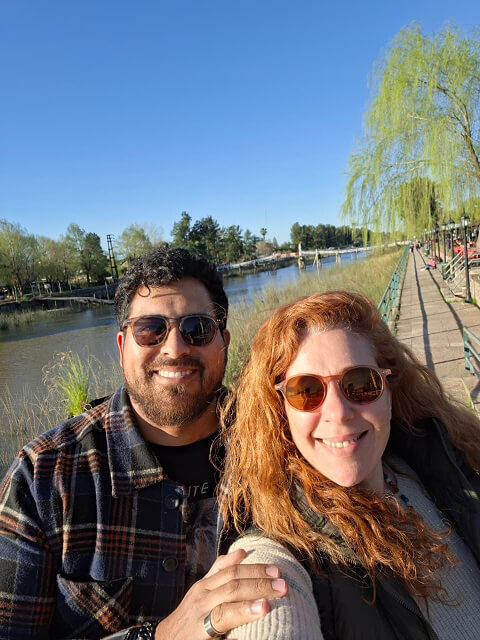
"I’ve experienced situations where balancing everything felt challenging. I honestly don’t think I could have managed without DataArt’s flexibility.
I had to take care of my husband during two delicate health situations. First, he ruptured his Achilles tendon and was immobilized for almost three months, and was unable to take care of basic daily needs. Shortly after, he suffered a herniated disc that left him bedridden for another two months. I had to manage everything at home, while also supporting the emotional impact of the situation. During that time, I had to take on full caregiving responsibilities while continuing to work. I could only make it possible because of remote work and the flexibility DataArt gave me. Without that support, I don’t think I would have been able to keep up with both my professional and personal responsibilities.
Flexibility is often seen as something that mainly benefits parents, but in reality, it supports a wide range of life situations and lifestyles."
“I never felt I had to choose between my career and my family.”
Karolina Milkowska Martinez is a developer in the production department in Lublin, Poland. She joined DataArt in 2020. A year later, she was preparing to go on maternity leave when DataArt stepped up to provide her with a flexible schedule. Here’s how DataArt helped her navigate some big changes in her work routine.
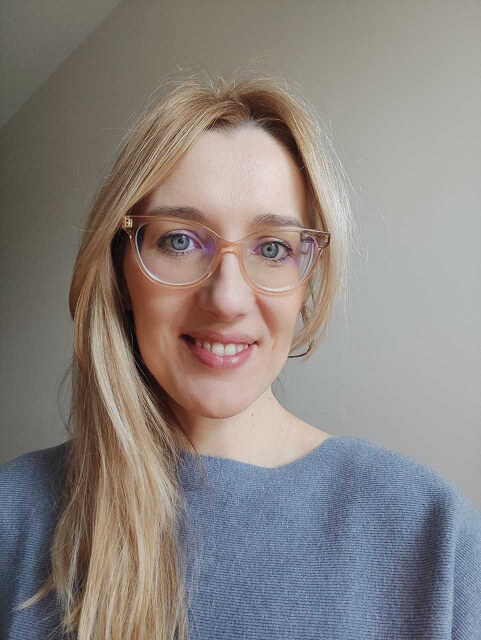
"I was able to work throughout my pregnancy thanks to the company’s flexibility and the option to work remotely. I started as a data analyst and have been gradually moving into a data engineer role.
I am a mother of two and a wife. I never felt I had to choose between my career and my family. There was a period of high workload combined with family difficulties. Thanks to the understanding and support from DataArt, I didn’t have to step back from my role. I was able to switch to part-time work for two months, which made a huge difference. I didn’t have to resign, and at the same time, I could fully focus on my family when they needed me most.
What I value most in DataArt is the trust, flexibility, and focus on results rather than just on spending time at a desk. The company truly supports families—employees are welcome to bring their families to company events such as summer picnics, a Halloween movie evening at the office, and various workshops."
“DataArt has always been by my side.”
Kamilla Bolotina has lived and worked in three different countries in the last four years in order to escape the war in her home country of Ukraine. DataArt has supported her in moving to Poland, then Canada, while she works as a single mom. Here’s Kamilla’s story of overcoming all the obstacles in her path.
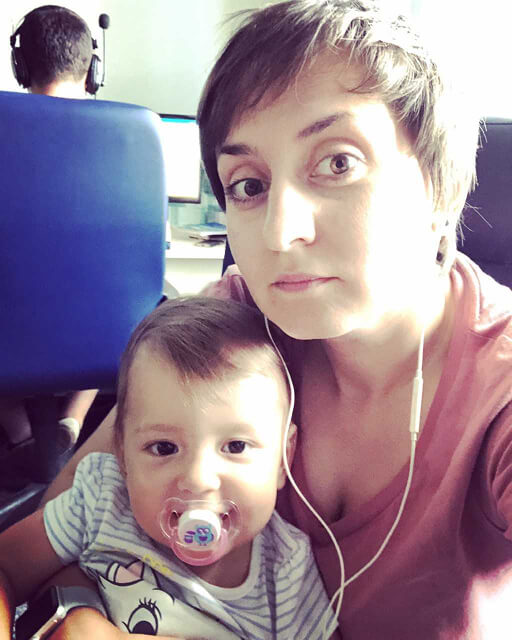
I started working at DataArt almost 12 years ago. I often joke that DataArt has always been by my side for the most significant events of my life. While working here, I got married, had a child, and got divorced. Being the sole caregiver for my daughter, it would have been challenging to combine care for a child with working full-time if it wasn’t for DataArt. I’ve never felt pressured to choose between my family and work duties. My schedule has always been flexible, and my project managers have always been understanding. And if I need to, I can always work from home or bring my daughter to the office.
After the war started, I was able to stay in Poland, and DataArt did all they could to help me with relocation and financial support. When I decided we couldn’t stay in Poland, my DMs did all their best to help me move to Canada. DataArt offered me the best conditions possible. I also know that whatever bothers me, I can always go talk to my PM, DM, or HR, and I know for a fact that the issue will be addressed.
The last 4 years have been hard. I’m on my own with my child, with no support. I have to work full-time, learn a new language, deal with immigration, health issues, and so on. I’m sure I would never have dealt with all this if I were working for some other employer. DataArt has always provided help when asked, and most importantly, when not even asked. When Canadians hear about DataArt’s flexibility, and especially our maternity leave conditions, they ask right away if DataArt is hiring. Are we hiring in Canada?
“DataArt recognized that returning to work from maternity leave is an emotional and psychological transition.”
Luz Otero works on DataArt’s PR management and integration from Argentina. She’s experienced firsthand how the company supports new mothers. She notes that DataArt doesn’t just discuss inclusion, equity, and belonging—it translates these conversations into real support.
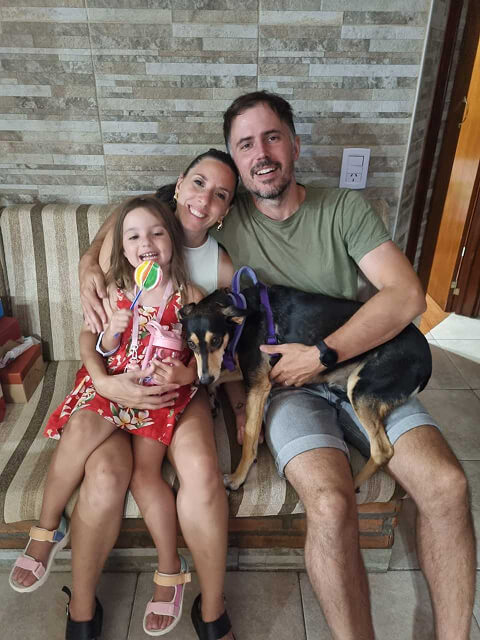
"DataArt supported me in a deeply human and respectful way throughout my pregnancy and postpartum period. I requested an extension of my maternity leave so I could spend more time with my baby, and it was granted without hesitation.
In many workplaces, motherhood is still treated as an inconvenience or a disruption. Here, I felt the opposite — I felt trusted, valued, and supported as a whole person.
For the first time in my career, I experienced what it means to work for a company that truly understands that caring for family members is not secondary to professional work; it’s part of life.
Motherhood reshapes your identity, your priorities, and your energy. Yet many systems expect women to return exactly as they were before — as if nothing fundamental has shifted. That gap can be overwhelming. DataArt recognized that returning to work after maternity leave is not just a logistical transition—it’s an emotional and psychological one.
Thanks to that environment, I later volunteered to support colleagues through the Helpline team, offering emotional support to others navigating their own return-to-work journeys. That felt deeply meaningful to me—turning personal vulnerability into collective support."
“My husband is jealous, because he can’t work from home like me.”
Elisaveta Pavlova joined DataArt in Sofia, Bulgaria, 6 years ago as a recruiter in the HR Department. When she had her first child, Lora, in 2024, she took one year of maternity leave, even though Bulgaria allows 2 years of maternity leave. Why did she come back early?
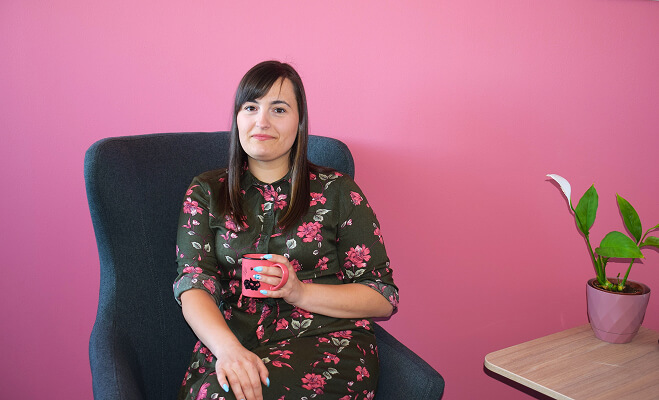
"My daughter Lora was born 2 years ago. She’s my first child. I worked full-time until just a few days before the delivery date. Everything was fine, and I felt good. I knew it would be better for me to be around people while I was pregnant.
In Bulgaria, we can take two years of maternity leave. In the first year, the company pays 90% of your salary. For me, this was a chance to take a rest. Lora is a calm girl, and it was a pleasure taking care of her at home.
At the same time, I was online for the first month or two, helping the new HR Manager who replaced me, because she didn’t get much time for onboarding before I went on maternity. I wanted to make sure that everything was fine.
When my first year of maternity leave came to an end, I got a call from a colleague asking, “When will you come back? We desperately need you.” It turned out that the manager they hired in my place wanted to leave the company. But I agreed to come back a year early, because I know DataArt has good rules, and I could combine working from home and taking care of my child. Working from home is one of the company’s best policies, and I really appreciate it. My husband is jealous because he can’t work from home.
When I returned from maternity, my team asked me personal questions, like ‘How’s Lora? Is everything fine? Which responsibilities do you want to cover now? Do you need help with any tasks?’ I felt welcome, even by people who were the budget holders on projects. Everyone was really supportive and made my return easier. We always help each other here. That’s the reason I came back a year earlier than I had to."