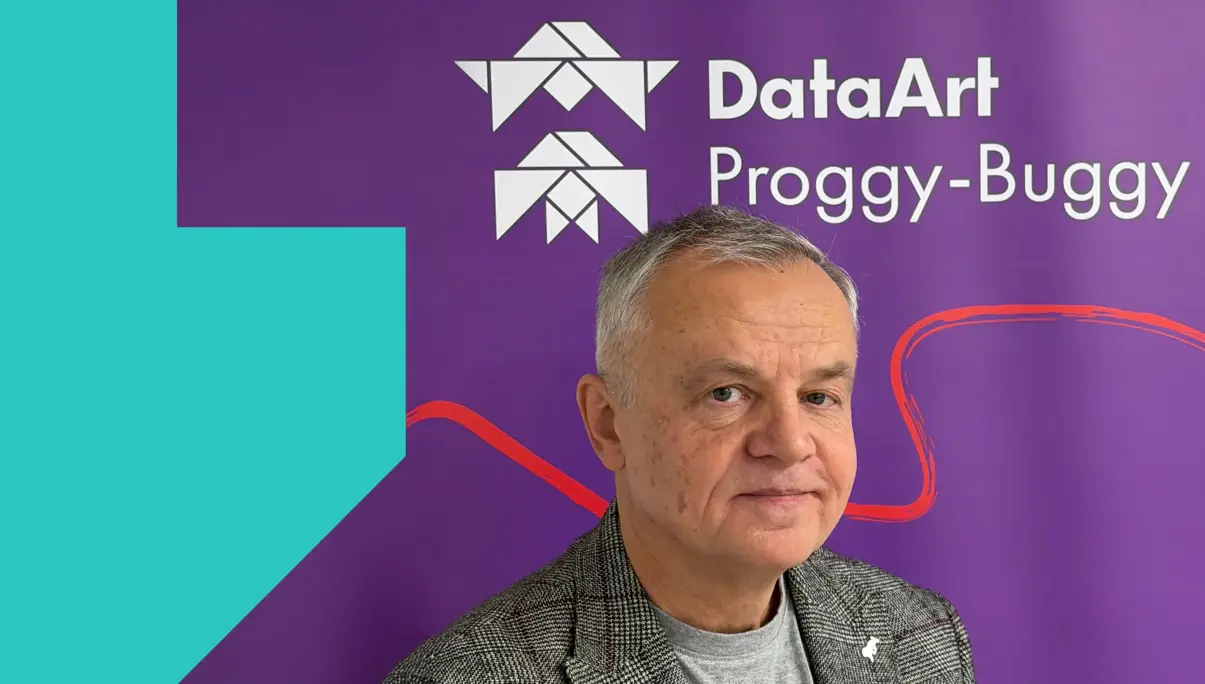
DataArt’s Proggy-Buggy programming Olympiad is a global community that has had over 10,000 participants since its inception in 2013, many of whom have gone on to work for DataArt. Alexander Khizha, DataArt’s Academic Advisor and a lecturer at Oles Honchar Dnipro National University in Ukraine, is the brain behind this hugely popular programming contest. Here’s how Alexander builds DataArt’s global reputation as a programming contest host and attracts the world’s top talent to DataArt.
Proggy-Buggy’s Roots
I started the Proggy-Buggy contest in 2013 to encourage my students to enter the programming profession. The contest was launched by DataArt thanks to the impetus of company leaders Mikhail and Julia Zavileysky!
Proggy-Buggy has grown many times over since, and DataArt’s management recognizes it as a key component of our professional outreach. We’ve recruited many new colleagues through this contest, and we’ll continue to do so in the future. Right now, the contest has exploded in India, and we are actively hiring there too.
The people I’ve brought to DataArt through the contest are very valuable to the company. They’re not just developers. Andrey Dereza is now the head of our R&D Center in Dnipro. Vladimir Timashov is our VP of Account Management and Digital Health in London. They’re creative and original people, and they’ve helped me conduct the contest as well. I'm happy to see how they’ve grown in DataArt, and how DataArt has benefited from them.
My role in Proggy-Buggy is to design problem statements and define the scenario. I’ve been conducting Olympiads for over 30 years now, and I’ve learned what makes a good task and a good contest. I love the challenge.
Integrating AI
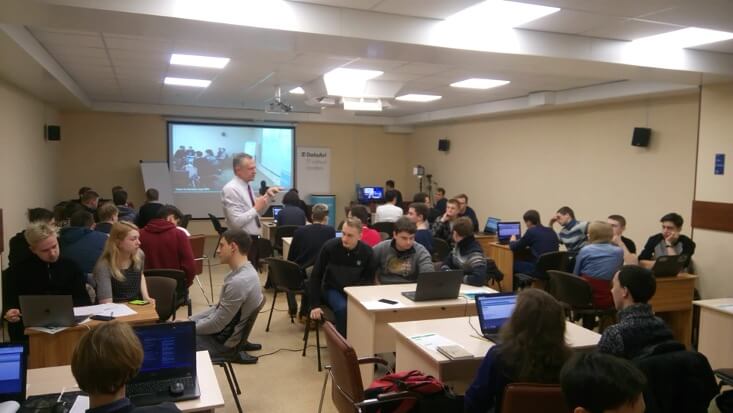
Proggy-Buggy has 13 questions that need to be solved in 42 minutes (a reference to “The Hitchhiker's Guide to the Galaxy” by Douglas Adams). It’s like the equivalent of blitz chess, but for programming. What I do with Proggy-Buggy requires all my experience and ability to make up new programming challenges, problem statements, tests, and so on. I’m constantly introducing new innovative procedures in Proggy-Buggy.
One of the main ideas of any Olympiad in programming, mathematics, and so on, is that participants do everything themselves. Nowadays with AI involved, that's almost impossible. We have a comparatively short time to invent new algorithms, procedures and strategies for the contest. My main idea nowadays is to not try and resist AI. It won’t work.
Our only chance is to make AI our friend, or at least a partner. We’re able to produce exciting strategic solutions that involve the use of AI in our contest.
AI is actually not as intellectual as many people think. It still struggles, for example, with spatial intelligence. So, we also have some problem statements and tasks that cannot be understood by AI yet.
Big Results
As we can see from our contest results, Proggy-Buggy attracts a lot of attention from the programming community. We just held our most recent edition on November 22, and we had over 600 teams competing. We have become comparatively famous in the programming world. The fact is that some of the ideas that we include in the basis of this Olympiad are very unusual. Imagine that you participate in an Olympiad and read a problem statement, and you come to the conclusion that the problem has no solution. If so, your solution is just one word: "UNDECIDABLE". We include some of these “undecidable” questions in each of our contests, and they really make Proggy-Buggy stand out.
In fact, we’re almost unique in the world today as a company that’s able to hold its own programming contest, right up there with Microsoft and Google. People come back again and again to do the contest, and these repeat contestants reflect DataArt’s prestige in the Olympiad world.
Of course, the Proggy-Buggy contests would not be possible without my wonderful teammates, including Yury Zaitsev, Max Dvoinishnikov, Andrey Mostovoy, Olga Denisenko, Eugene Radchenko, Valery Protsenko, Violetta Podvolotskaya, and so many others.